
Guide · Northville, MI
Preventing Ice Dams in Michigan Winters
Those picturesque icicles along the eave are a warning sign. Ice dams form when heat escaping the attic melts snow that refreezes at the cold roof edge — and the trapped water goes looking for a way inside.
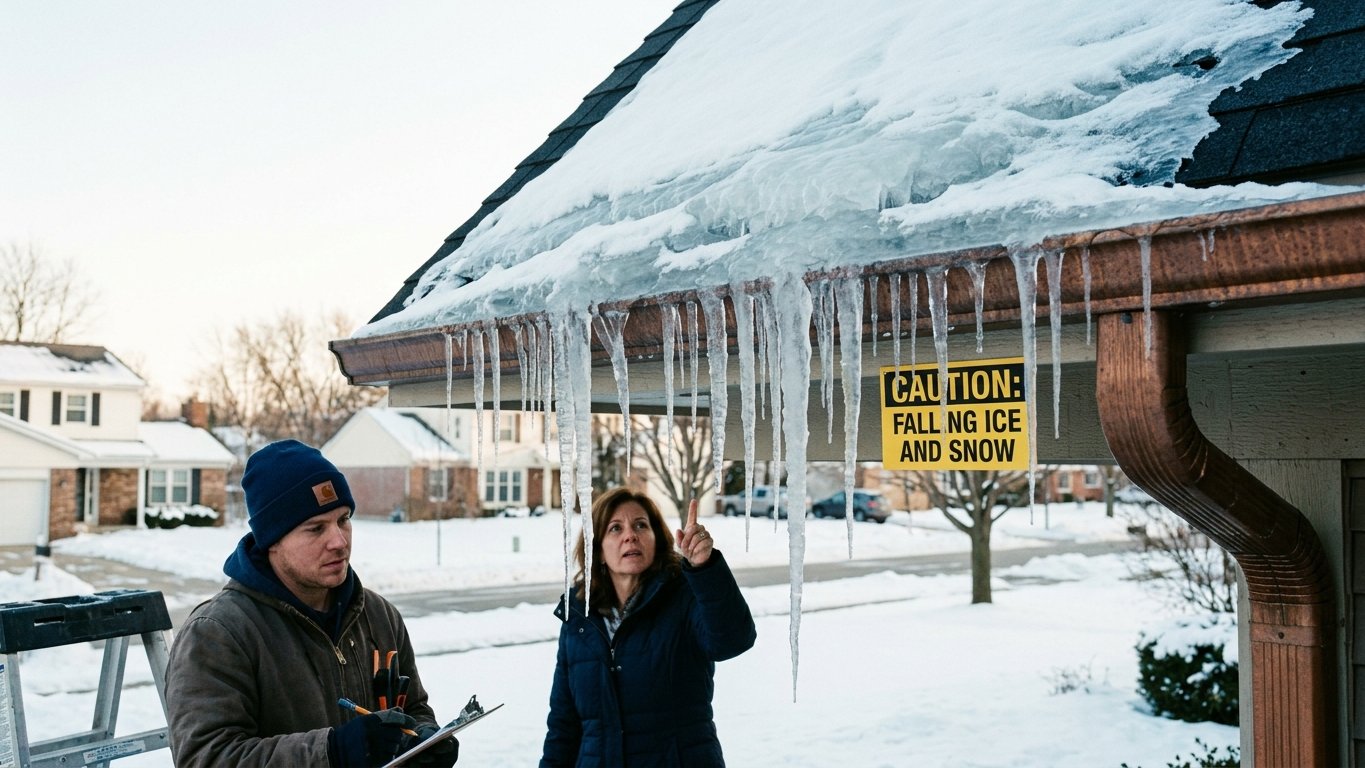
The root cause is almost always heat loss into the attic. Warm, moist air leaking up through the ceiling melts snow on the upper roof; the meltwater runs to the cold eave and refreezes, building a dam. Behind that dam, water pools and works its way under the shingles.
The durable fixes attack the heat: air-seal the ceiling, add attic insulation, and keep soffit-to-ridge ventilation flowing so the roof deck stays cold. Restoring blocked soffit vents is often the missing piece. These steps reduce melting in the first place.
On top of that, manage the water. Heated cables along the eave, gutters, and downspouts keep a drainage channel open through the coldest stretches, and clear gutters give meltwater somewhere to go. The combination — cold roof plus open drainage — is what reliably keeps water out.
If you already have a recurring problem, our heated-cable ice dam service keeps a melt channel open through the winter.
And because cold eaves start underneath, restoring blocked soffit ventilation is often part of a lasting fix.
For the building-science details, the University of Minnesota's guidance on dealing with ice dams walks through why air-sealing the attic matters most.
Why Michigan's climate is perfect for ice dams
Ice dams need a stretch of cold weather, snow on the roof, and a warm roof surface, and Michigan winters supply all three on repeat. Snow sits on the roof for weeks, daytime and nighttime temperatures swing back and forth across freezing, and heat escaping from the house warms the upper roof from below. That combination melts snow high on the slope, and the meltwater runs down to the cold overhang and freezes again.
As that cycle repeats through January and February, the frozen ridge at the eave grows thicker and water begins pooling behind it. Because the eave hangs past the heated walls, it stays at outdoor temperature while the roof above stays warmer, creating a built-in melt-and-refreeze line right where the dam forms. Freeze-thaw weather does not just allow ice dams here; it manufactures them season after season.
The attic side of the fix: air-sealing, insulation, ventilation
The lasting fix starts in the attic, because a cold roof deck cannot melt the snow that feeds a dam. The first move is air-sealing the ceiling plane: closing the gaps around light fixtures, attic hatches, plumbing stacks, and top plates where warm indoor air leaks up. That warm air is the heat source melting your roof, and stopping it does more than any amount of ice removal.
Insulation and ventilation finish the job. Adequate insulation slows the heat that remains from reaching the deck, and a clear path from the soffit vents up to the ridge flushes any warmth that gets through with cold outside air. The three work together: seal the leaks first, then insulate, then make sure air can move from eave to ridge so the whole roof stays near outdoor temperature.
The roof-edge side: heated cable and clear drainage
When the attic fix is impractical or only partial, you manage the water at the edge instead of fighting the heat. Heated cable run along the eave, into the gutter, and down the downspout keeps a melt channel open so water that does reach the cold edge has somewhere to drain rather than backing up under the shingles. It treats the symptom and works best as a companion to attic work, not a replacement for it.
Clear drainage is the other half. A gutter packed with frozen leaves gives meltwater nowhere to go and helps the ice build, so going into winter with clean, free-draining gutters and downspouts matters. The goal at the roof edge is simple: give any water that forms an open, downhill path off the roof before it can freeze into a dam.
What not to do about ice dams
Do not chip at the ice with a hammer, hatchet, or sharp tool. It is slow, it sends you onto an icy roof or a high ladder, and it gouges shingles you cannot easily repair in winter, trading a water problem for a roof problem. Throwing rock salt or de-icer directly onto the shingles is just as harmful; it stains and corrodes roofing and runs off into plantings below.
Do not ignore interior warning signs either. Water stains on a ceiling, a damp spot at the top of an exterior wall, or peeling paint near the eave means meltwater is already getting in, and the longer it sits the more it feeds mold and rot. Treat those stains as a prompt to address the cause that winter rather than waiting for spring to see how bad it got.
Why some roofs get ice dams and others don't
Two houses on the same street can get very different results, and the difference is usually in the attic and the roof's shape. A home with generous insulation, a well-sealed ceiling, and clear soffit-to-ridge airflow keeps its roof deck cold, so the snow on it barely melts. A home leaking heat into the attic melts that snow from below and feeds a dam.
Roof geometry plays a part too. Long, low eaves, complex valleys, and dormers create cold edges and catch points where meltwater slows and refreezes. North-facing slopes that rarely see direct winter sun hold their snow longer, giving the melt-and-refreeze cycle more chances to build ice at the edge.
Catching the warning signs early
The outdoor signs are thick icicles hanging from the eave and gutter, a visible ridge of ice at the roof edge, and snow that melts off the upper roof while the eave stays packed. Any of these means the melt-and-refreeze cycle is already running on your roof.
Inside, watch for water stains on top-floor ceilings or at the top of exterior walls, damp insulation in the attic, or peeling paint near the eaves. These mean meltwater is already finding its way in. Catching them mid-winter rather than in spring lets you manage the water and plan the attic fixes before the damage spreads.
What to do when an ice dam is already leaking
If water is actively coming inside, the first priority is limiting interior damage: move belongings clear, catch the drips, and relieve trapped water where you can safely reach it from inside. Resist the urge to climb up and attack the ice, which is how winter injuries and gouged shingles happen.
From the ground, a roof rake can pull snow off the lower roof to slow the cycle, and a professional can clear an established dam safely if the leaks continue. Once the immediate threat passes, treat it as a signal to address the attic heat loss and ventilation that caused it, so the next cold snap does not simply repeat the damage.
Frequently asked questions
Do gutters cause ice dams?
Gutters don't cause ice dams — heat loss into the attic does. But a debris-packed gutter can't drain meltwater, which makes the problem worse. Keeping gutters clear is part of managing the water once the dam-causing heat loss is addressed.
Are icicles always a sign of an ice dam?
Not always, but they are a warning worth taking seriously. A few small icicles can form from ordinary melt on a sunny day. The concern is a row of thick icicles hanging off the eave or gutter, which usually means snow is melting higher up and refreezing at the cold edge: the same process that builds an ice dam. If you see them returning every cold spell, treat it as a sign that attic heat is reaching your roof.
Is it safe to remove an ice dam myself?
Removing one from a ladder in winter is risky, and aggressive removal often does more harm than the dam. From the ground, a long roof rake can pull snow off the lower roof so there is less to melt, which is the safer self-help option. Climbing onto an icy roof, chipping at ice, or balancing a ladder on frozen ground is where people get hurt and where shingles get damaged. For an established dam causing interior leaks, careful professional removal is the safer route.