
Northville, MI
Soffit & Fascia Repair in Northville, MI
The fascia board is what your gutters hang on, and the soffit closes in the underside of the eave. When years of overflow rot them out, gutters fail and water gets into the roof — so we repair the wood, not just the gutter.
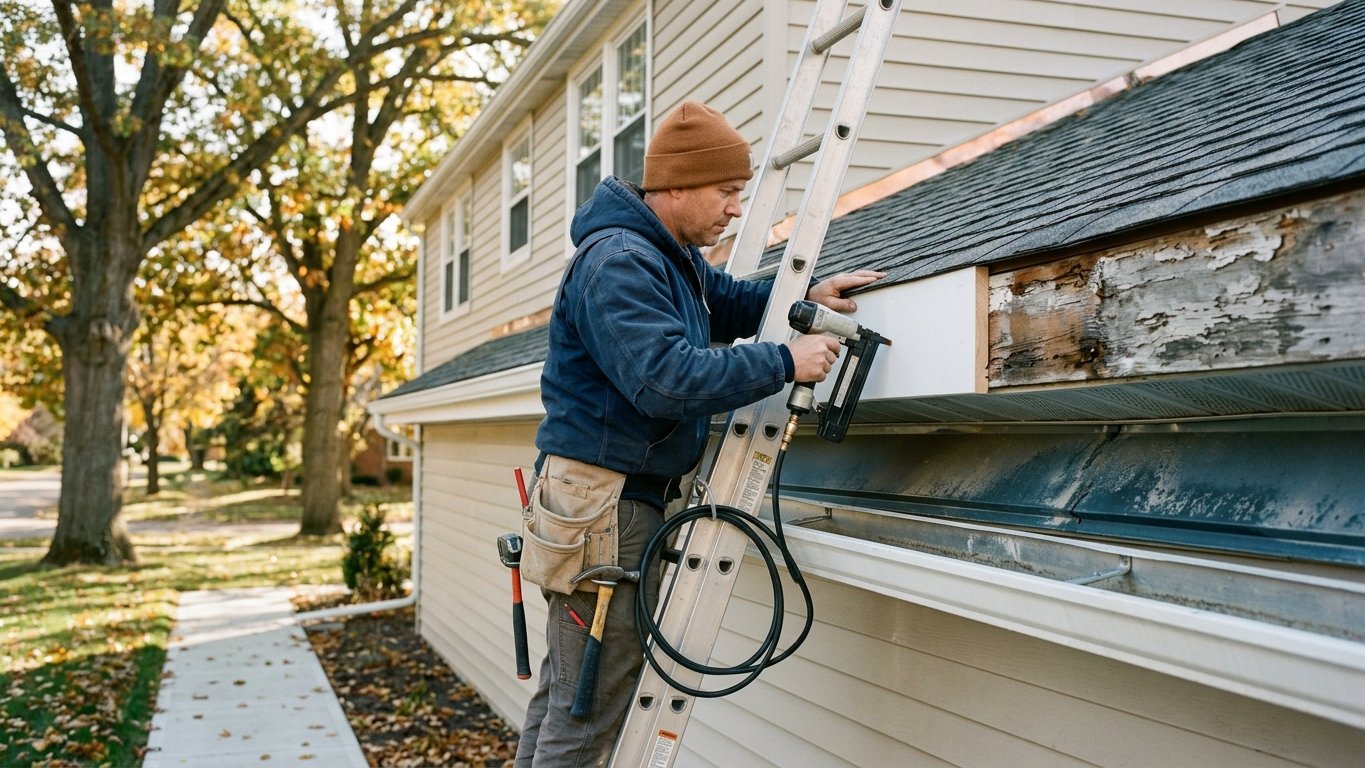
Failing gutters and rotted fascia go hand in hand: water spilling behind the gutter soaks the board until hangers tear loose and the gutter sags. We replace the damaged fascia with sound material, then re-hang the gutter on wood that will actually hold it.
Damaged soffit lets squirrels, birds, and wasps into the eave and can hide attic-ventilation problems that drive ice dams. We repair or replace soffit panels and restore proper venting so the roof edge stays dry and cold.
Because we're a gutter company first, we coordinate the wood repair with the gutter work in one visit — no juggling two contractors to fix one roofline.
Keeping that airflow open matters — ENERGY STAR explains that ventilating the attic keeps the roof cold and helps prevent ice dams — which is why we never block the soffit vents when we close the eave back up.
Because the wood and the gutter fail together, we handle gutter, soffit, and fascia services as one coordinated project.
How fascia and soffit fail alongside your gutters
Fascia is the vertical board your gutters are anchored to, and soffit is the panel that closes off the underside of the eave. When a gutter overflows season after season, that water runs down the back of the trough and saturates both.
Once the wood softens, hangers lose their grip and the gutter begins to pull away or sag, which makes it overflow even more. It becomes a loop: failing gutters rot the wood, and rotted wood drops the gutters. Breaking that cycle means fixing both together.
Spotting rot, pests, and blocked ventilation early
Look for fascia that has darkened, swelled, or feels spongy, and for peeling paint that lifts in sheets. Stains streaking down the board or daylight visible at the eave are signs water has been getting behind the gutter for a while.
Soffit damage opens the door to squirrels, birds, and insects, and it can hide a ventilation problem you cannot see from the ground. Eave vents that are crushed, painted over, or blocked trap attic heat and moisture, which is part of what feeds winter ice dams.
Our wood-first, gutter-second repair sequence
We take the damaged gutter down, cut out the rotted fascia or soffit, and replace it with sound material before any gutter goes back up. Re-hanging onto compromised wood only buys a few months, so we never skip this order.
Because we coordinate the wood and the gutter in a single visit, you are not juggling a carpenter and a gutter crew on separate days. The new run goes back up at the correct pitch, anchored into fresh board that can actually hold it.
Why soffit ventilation matters in every season
Soffit vents pull cool air into the attic, and that airflow does quiet work year-round. In winter it helps keep the roof deck cold, which is the real defense against the snowmelt-and-refreeze pattern that builds ice dams at the eave.
In humid Michigan summers, the same airflow lets heat and moisture escape instead of baking the attic and stressing the roof above. Repairing soffit is not just cosmetic; restoring blocked or damaged venting protects the whole eave assembly through every season.
What's included
- Removal of rotted fascia board and damaged soffit
- Replacement with sound, primed material
- Restored soffit ventilation where needed
- Re-hanging of gutters on solid fascia
- Sealing and finish to match the trim
Perfect for: Homes with soft or rotted fascia, sagging gutters, or animals getting into the eaves.
Frequently asked questions
Do I need to fix the fascia before installing gutter guards?
If the fascia is rotted, yes. Guards add a little weight and the gutter needs solid wood to anchor to. We assess the fascia at the estimate and fold any needed repair into the project.
How does soffit relate to ice dams?
Blocked or damaged soffit vents stop cold air from flowing along the underside of the roof, letting the eave warm up and melt snow that refreezes as an ice dam. Restoring soffit venting is part of a real ice-dam fix.
What materials do you use for fascia and soffit?
Generally primed, paintable wood for structural fascia where strength matters, often finished with an aluminum or metal wrap that sheds water and resists rot at the exposed face. Soffit is commonly closed in with vented metal or panel material that maintains airflow into the attic. We match the approach to your home and to what the eave needs to stay sound and properly ventilated.
Can damaged soffit be matched to the rest of the house?
In most cases, yes. We work to match the profile, finish, and color of your existing soffit and fascia so a repair blends in rather than standing out. Older or discontinued styles can be harder to match exactly, but a close match in profile and a coordinated color usually reads as seamless from the curb. We will set expectations before starting.
How do I know if my fascia is rotted?
The clearest signs are paint peeling in sheets, wood that looks dark or swollen, and hangers pulling loose so the gutter sags. From the ground you may also see staining streaking down the board or gaps where it meets the roof. If a section feels soft or spongy to the touch, the rot is already advanced and the board should be replaced before anything is re-hung on it.
Can soffit and fascia be repaired in winter?
Often, yes, though the work goes most smoothly in milder, drier weather. If failing fascia is letting water into the roof or dropping a gutter, it is better to address it than to wait, and a sound structural repair can be made in colder months. For purely cosmetic matching that involves paint or certain finishes, we may suggest timing that part for warmer, drier conditions.