
Northville, MI
Gutter Cleaning Service in Northville, MI
Even the best gutters need an occasional clear-out — and until you have guards, a packed gutter is a slow leak waiting to happen. Our cleaning crews scoop, flush, and check every run so water has a clear path off your roof.
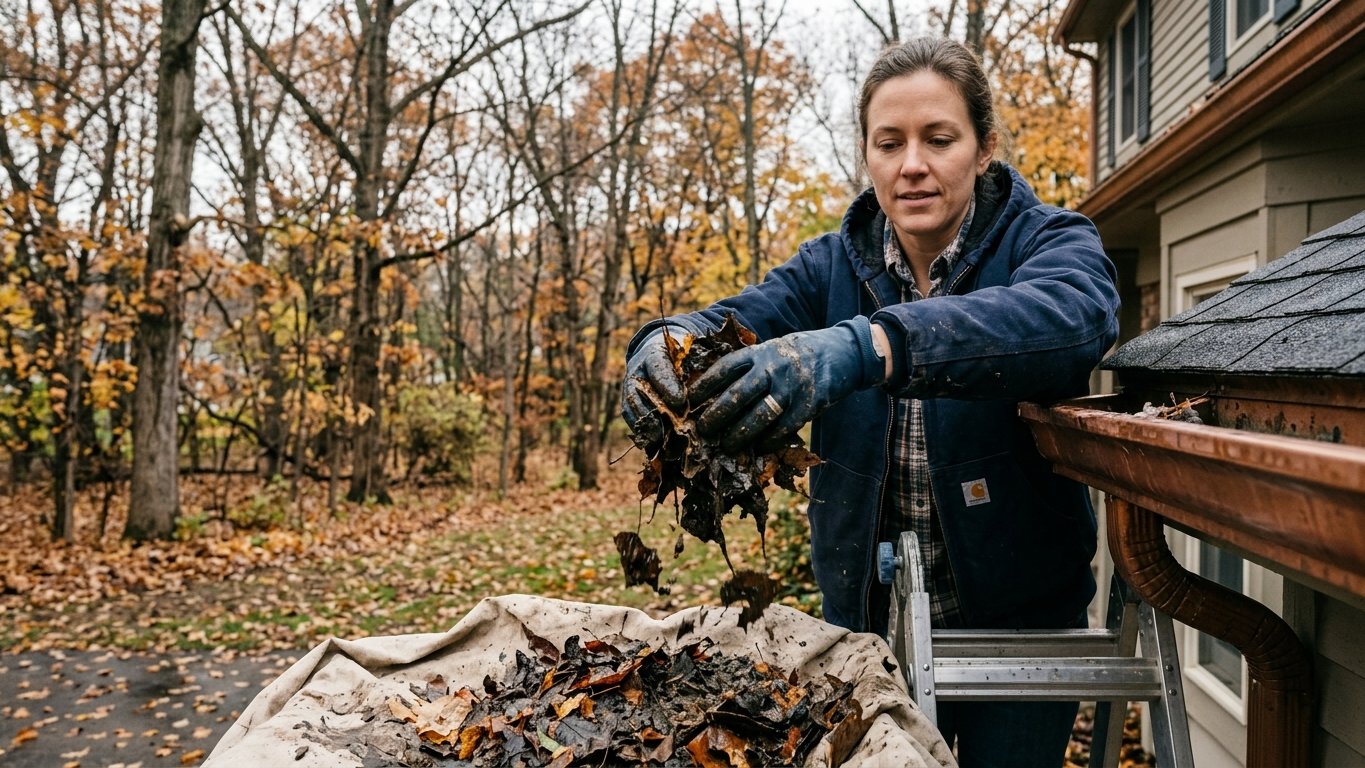
Clogged gutters overflow behind the fascia, feed rot, and dump water against the foundation. We remove the debris by hand, bag it, flush every downspout, and confirm the whole system drains before we pack up.
Cleaning is also the honest first step before guards. If your gutters just need a clear-out and a small repair, we'll say so — and if you're tired of paying for cleanings, we'll show you what guards would cost instead.
That foundation risk is well documented — University of Minnesota Extension names missing or failing gutters and downspouts among the common causes of wet basements — they send roof water straight at the foundation instead of away from it.
When you're ready to stop cleaning for good, Northville gutter guard installation ends the cycle entirely.
What professional gutter cleaning includes
A full cleaning starts at the gutter and ends at the ground. We clear every run by hand, lift out the packed debris rather than pushing it toward the outlet, and bag it so it does not end up in your beds or on the lawn. Then we move to the downspouts, flush each one with water, and watch where it comes out.
The job is not finished until water runs clean from end to end and drains away from the house. If a section still backs up, we trace it to the clog instead of leaving you to find the problem after the next storm. That end-to-end check is the difference between a quick scoop and a cleaning that actually holds.
Why Northville gutters clog twice a year
Northville yards are full of mature maples, oaks, and pines, and each one sheds on its own schedule. In spring the maples drop seeds and tassels that mat together into a dense, soggy layer. In fall the leaves come down all at once and pile into every run.
Pines add a year-round problem because needles are small enough to slip past loose covers and bind into a felt-like clog. On top of all that, asphalt shingles shed fine grit that settles into the bottom of the gutter and holds moisture. That mix is why one cleaning a year often is not enough on a tree-heavy lot.
Doing it safely and thoroughly
We clear gutters by hand because it is the only way to know the run is truly empty. Blowing debris out can look fast, but it scatters wet seeds across the roof and drives material deeper into the downspout, where it hardens into the clog you will be calling about later.
Ladder work around a suburban two-story takes care, so we set up on stable footing and work the roofline in sections rather than overreaching. We also protect what is below: debris gets bagged, landscaping stays covered where it matters, and we leave the gutter and the ground beneath it the way we found them.
What we check while we are up there
Being at the gutter line is the best chance to spot trouble early, so we look while we work. We check the pitch to make sure water is moving toward the outlets and not pooling, eyeball the seams for early separation, and test the hangers to see if any have pulled loose from the fascia.
We also watch how fast each downspout drains and note any soft or stained fascia behind the gutter, since that is where a slow leak shows up first. None of this turns a cleaning into a sales pitch. It just means you hear about a loose hanger or a low spot now, while it is a small fix, instead of after it has fed rot.
Signs your gutters are overdue for a cleaning
The most obvious sign is water sheeting over the edge during rain instead of running to the downspouts, but the quieter signals matter just as much. Dark streaks down the fascia, grit and shingle granules washing out at the spouts, and gutters that visibly sag under their own weight all point to a channel that has filled up.
Some signs you can spot from the ground between storms: seedlings or weeds sprouting from the gutter, birds working the run for nesting material, or water that pools and lingers after the rain stops. On a tree-heavy Northville lot, any of these means it is time to clear the gutters before the next downpour finds the overflow path.
When a cleaning turns up more than debris
Clearing the gutters gives us a close look at the whole system, and sometimes the debris was hiding a problem. A seam that only leaks when the gutter is full, a hanger that has quietly pulled from the fascia, or a low spot that ponds water can all surface once the run is finally empty.
When that happens, we show you photos and explain what we found rather than quietly working around it. Often the fix is small and worth doing while we are already on-site; occasionally it points to a repair or, on an aging system, replacement. Either way you get the honest picture, not a cleaning that papers over the real issue.
When it is time to stop cleaning and add guards
Cleaning is the right answer for a while, but there is a point where it stops making sense. If a heavily wooded lot has you booking a cleaning every season, or if a clog turns into an overflow before you can get it scheduled, the repeat cost and the risk start adding up.
The honest math is simple: when the cleanings you would pay for over a few years approach what guards would cost, guards usually win, especially on a roof that is hard to reach. We will tell you straight whether you are there yet or whether another cleaning is still the smarter move. Guards are a step you take when the numbers say so, not before.