
Northville, MI
Ice Dam Prevention in Northville, MI
Michigan winters build ice dams at the roof edge that force snowmelt back under the shingles and into the house. We install heated cables and clear-flow solutions that keep the eave and gutter draining all winter.
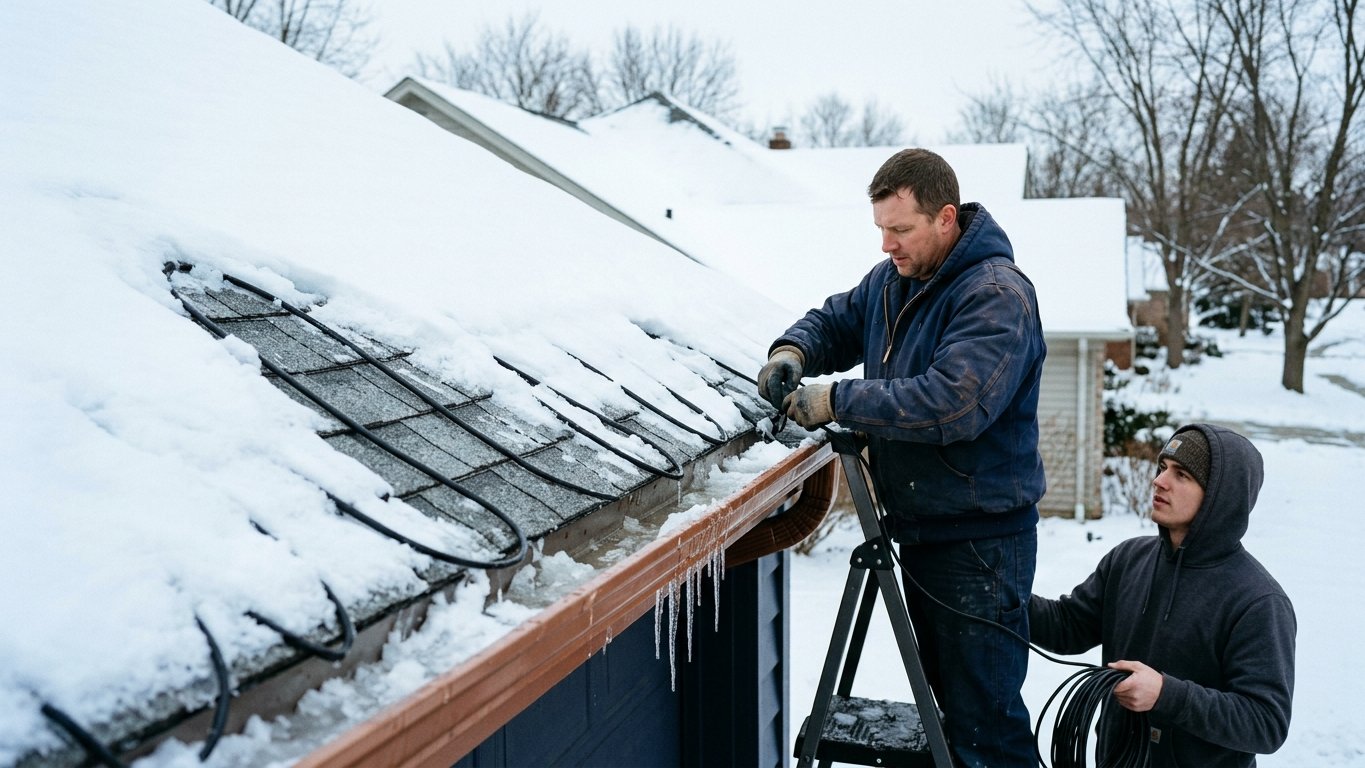
An ice dam forms when heat escaping into the attic melts snow on the upper roof; the water runs down to the cold eave and refreezes, building a ridge of ice that traps the next round of melt. That trapped water finds its way under the shingles.
We install self-regulating heated cables along the roof edge, in the gutters, and down the downspouts to keep a continuous melt channel open, so water always has an escape route instead of pooling and refreezing.
Clear gutters and downspouts are half the battle — a gutter packed with frozen debris can't drain no matter what. Pairing heat cables with guards and clean downspouts gives the most reliable winter protection.
Because the real fix is keeping the roof edge cold, University of Minnesota Extension explains how ice dams form at the eave when warm attic air melts snow from below.
Heat cables are the cold-weather side of winter-ready gutter protection that keeps water moving all season.
How a Michigan ice dam forms, step by step
It starts with heat escaping into the attic, which warms the upper roof deck enough to melt the snow sitting on it. That meltwater trickles down toward the eave, which overhangs open air and stays much colder.
At that cold edge the water refreezes, and with each freeze-thaw day the ice ridge grows. Eventually it backs up the melt behind it into a pool that creeps under the shingles, which are built to shed running water, not standing water. That is when leaks show up on ceilings and walls.
Where heated cable goes and how it keeps water moving
We run self-regulating heated cable along the eave, into the gutter, and down through the downspout so the whole exit path stays open. The point is not to melt the entire roof; it is to carve and hold a channel where water can drain before it can freeze into a dam.
Self-regulating cable adjusts its output to the temperature, drawing more in deep cold and easing off as conditions warm. That keeps the drainage path working through the worst of the season without you having to babysit it.
Why clear gutters and downspouts are non-negotiable in winter
A heated channel only helps if the water has somewhere to flow once it melts. If the gutter is packed with fall leaves or the downspout is plugged, meltwater simply pools and refreezes despite the cable.
That is why we make sure gutters and downspouts run clear before the cold sets in. A clean, freely draining system is the foundation everything else builds on; the cable manages the freeze-thaw at the edge, but the gutter still has to carry the water away.
Pairing cable with attic air-sealing and ventilation
Heated cable manages the symptom at the roof edge, and it does that job well. The durable fix for the underlying cause is keeping the roof deck cold, so warm air never melts the upper snow in the first place.
That comes down to sealing the air leaks that let attic heat rise and keeping the soffit-to-ridge airflow open so the deck stays cold. Many homes benefit from both: cable to protect the eave now, and tighter air-sealing and ventilation to reduce how hard the dams form in the first place.
What's included
- Self-regulating heated cable along eaves, gutters, and downspouts
- Exterior-rated power connection and routing
- Clearing of gutters and downspouts before the season
- Guidance on attic air-sealing and insulation referrals
- Walkthrough of safe seasonal operation
Perfect for: Homes that see recurring icicles, ice ridges at the eaves, or water stains on interior ceilings in winter.
Frequently asked questions
Do heated cables fix the cause of ice dams?
Cables manage the symptom by keeping a drainage path open, which prevents interior leaks. The root cause is heat escaping into the attic, so we also point you toward air-sealing and insulation. Many homes use both for full protection.
Will gutter guards stop ice dams?
Guards don't stop ice dams on their own, but they keep the gutter clear so meltwater can drain instead of freezing in a debris-packed channel. Combined with heat cable and good attic venting, they're part of the solution.
When should I turn heated cables on and off?
Turn them on before a snow or ice event while temperatures hover around or below freezing, not after a dam has already formed. Running them ahead of the melt-and-refreeze keeps the drainage channel open from the start. You can shut them off once the eaves are clear and a stretch of above-freezing weather settles in, since they only earn their keep during freeze-thaw conditions.
Do roof rakes or chipping the ice help or hurt?
A roof rake used gently from the ground to pull snow off the lower roof can reduce the fuel for a dam, and that is generally safe. Chipping at established ice with tools is risky: it is easy to gouge shingles, dent gutters, or pry up flashing, and it does nothing about the cause. Clearing the snow source and keeping a drainage path open are the safer moves.