
Northville, MI
Micro-Mesh Gutter Guards for Northville Homes
Not all guards are equal. Micro-mesh is the standard we install because it stops the debris that defeats screens and reverse-curve covers: shingle grit, seed pods, and pine needles.
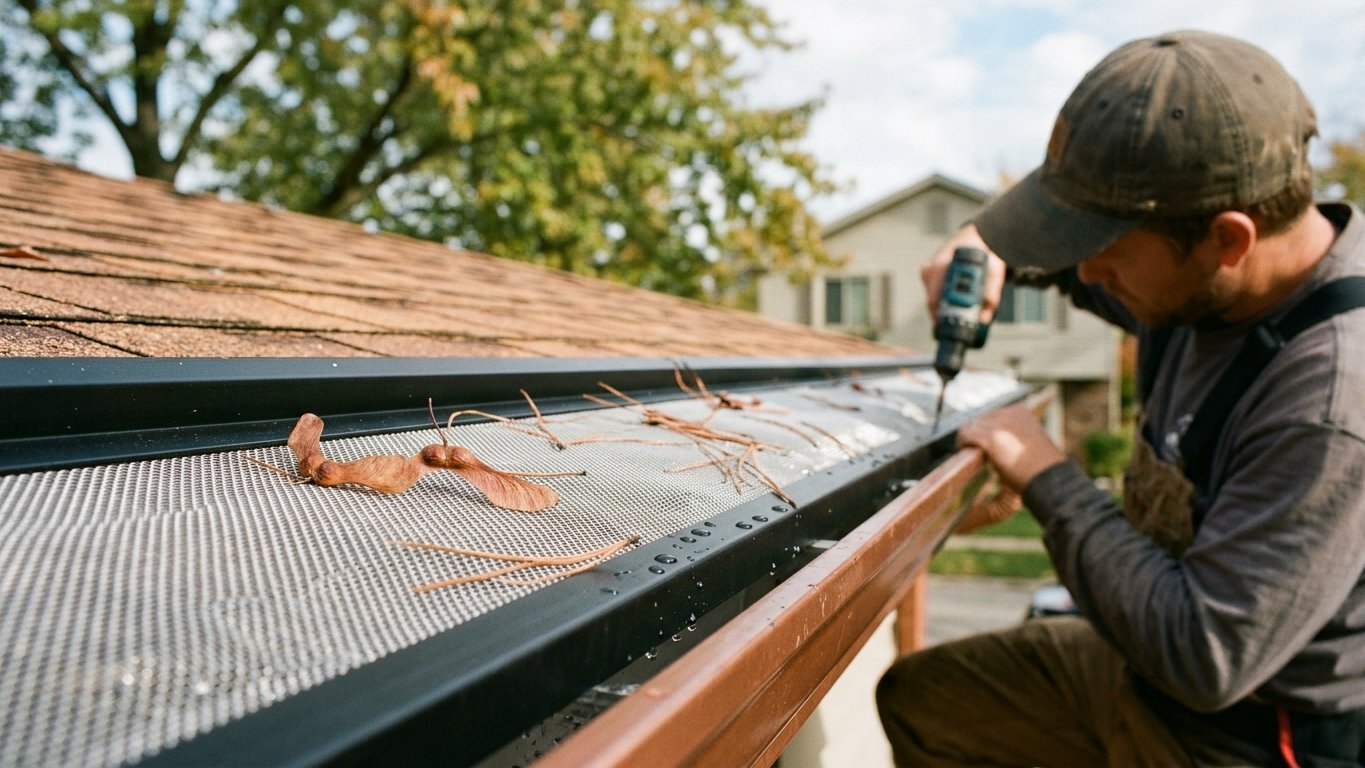
A micro-mesh guard is a stainless steel screen with thousands of tiny perforations mounted on a rigid frame. The frame gives the panel strength so it won't sag between hangers, and the woven steel won't rust, warp in the sun, or get brittle in a Michigan January.
Compared with plastic screens (which clog and crack) and reverse-curve helmets (which let small debris ride the curve right into the gutter), fine mesh keeps the gutter genuinely empty. The only thing that gets through is water.
We carry guard profiles to match standard 5-inch and oversized 6-inch K-style gutters, so the system looks like part of the roof rather than an aftermarket add-on.
Still weighing your options? You can compare every gutter guard option before you decide which system fits your home.
How micro-mesh filtration works
Micro-mesh works by letting water cling and pass through openings small enough that solid debris simply cannot follow. Rain hits the fine weave, the surface tension pulls it down into the gutter, and grit, needles, and seed pods are left sitting on top where they dry out and blow or wash away.
The tight hole size is what separates it from ordinary screens. Where a wider screen lets needles spear through and shingle grit settle into the channel, the micro-mesh openings are too small for any of that to enter, so the only thing reaching your gutter is the water you want it to carry.
Why stainless mesh on an aluminum frame lasts
The mesh is stainless because the gutter line lives in constant water, road salt, and humidity, and stainless resists the rust that would eat through a lesser metal. That corrosion resistance is what keeps the fine openings intact instead of flaking and widening over the years.
The aluminum frame underneath gives the panel its rigidity so the mesh stays flat and taut instead of sagging into the channel under wet debris. Aluminum also shrugs off UV exposure and does not turn brittle and crack in the freeze-thaw swings that split cheaper plastic, so the whole assembly holds its shape season after season.
Micro-mesh compared to foam, brush, screen, and reverse-curve
Foam inserts and brush bristles sit inside the gutter and act like a filter that collects debris rather than blocking it; over time they trap seeds and grit, hold moisture, and need pulling out and cleaning. Open screens keep big leaves out but let pine needles spear through and fine grit wash in, so the channel still silts up.
Reverse-curve covers rely on water wrapping around a solid nose, which works until the lip collects grime and overshoots in a heavy downpour, and they offer an easy ledge for debris to pile on. Micro-mesh sidesteps all of these failure modes by filtering at the surface with openings too fine for debris and too open to overshoot.
Matching the guard to your gutter and roof
The guard has to fit the gutter it sits on, so we match the profile to standard five-inch and six-inch K-style runs rather than forcing a one-size panel. A proper fit means the mesh seats cleanly to the front lip and back edge with no gap for debris to slip under.
We also work with your roof edge and hidden hangers so the guard is supported without lifting shingles or interfering with the fasteners holding the gutter. Setting the panel at a slight outward pitch helps debris shed off the surface instead of parking on top, which keeps the mesh open and the water moving.
What's included
- 316-grade stainless mesh on a rigid aluminum frame
- Profiles for both 5-inch and 6-inch K-style gutters
- Powder-coated frame in roof-matching colors
- Hidden-hanger compatible mounting
- Debris-shedding pitch set during installation
Perfect for: Homeowners who've been burned by cheap screens or reverse-curve covers and want the finest filtration available.
Frequently asked questions
What's the difference between micro-mesh and a reverse-curve guard?
Reverse-curve guards rely on water clinging to a nose and curving into the gutter, which also lets fine grit ride along. Micro-mesh filters at the surface, so only water passes and debris stays on top to blow or wash away.
Does the mesh ever clog?
Pollen and fine dust can form a film over years, but rain typically rinses it clear. If flow ever slows, the mesh wipes clean from the surface — you never dig debris out of the gutter itself.
Does pollen or fine dust eventually block the mesh?
No, not in a way that stops your gutters from working. Pollen and fine dust can leave a light film on the surface, but rain and wind clear most of it, and water still passes through. If a stubborn haze builds after a heavy pollen season, a quick rinse with a hose from a stable spot restores full flow without any channel cleaning.
Can micro-mesh be installed on my existing gutters or only new ones?
Either way works. If your current gutters are sound, we clean them, flush the downspouts, re-secure loose hangers, and check the pitch before fitting the mesh over them. If the gutters are sagging, rusted, or leaking at the seams, we will tell you honestly, since the guard performs only as well as the channel beneath it.